
Care settings have 24-hour staff, visitor bays and emergency access that must stay clear. Staff charging belongs in marked staff bays, with leads that cannot trail across an ambulance route. A modest AC bank with load management is usually right. Visitors should not be invited to block a clinical bay for a top-up. The building's electrical capacity is often already busy with kitchens, lifts and plant, so a survey has to see those loads.
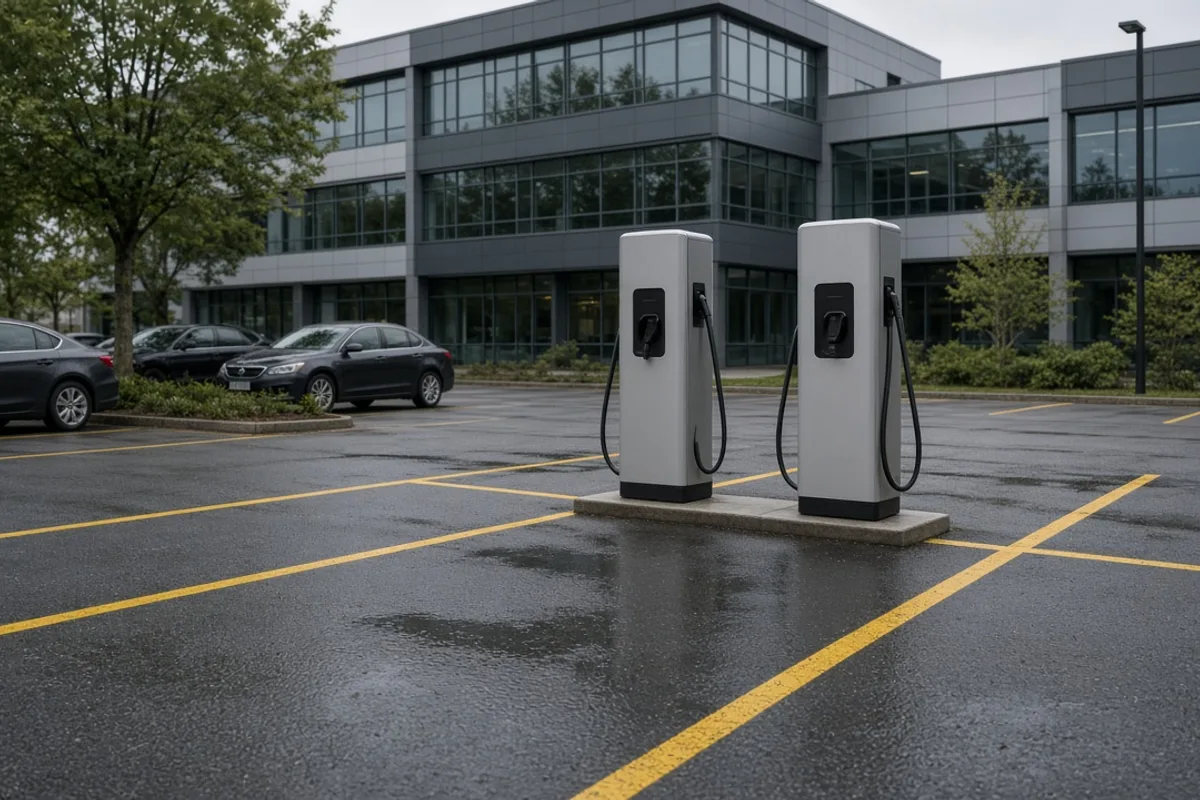
Staff EV charging at care homes: questions for the first visit
If a workplace grant is available, check eligibility for the operator. A care home is not automatically excluded or included.
How staff EV charging at care homes moves the job
The cost of getting the bay wrong is operational, not just electrical. Move the socket, not the ambulance path.
What goes wrong with staff EV charging at care homes
The mistake is a row of posts on the turning circle because that wall was easiest.
Point at staff EV charging at care homes in the pack
The plan should show emergency access, staff bays and the maximum load.
Staff EV charging at care homes
Night shifts mean cars arrive when other staff cars are still there. Design for overlap, not for a tidy daytime photo.
- Keep emergency routes clear
- Design for shift overlap
- Plant load is already high
- Visitor charging is a separate decision
Frequently asked questions
Can residents' relatives use them?
Only under a policy you have written. Default to staff if the grant and the bays are for staff.
Do we need rapid chargers?
Almost never for staff cars. Rapids add cost, supply pain and a reason for people to wait in the wrong place.
What about domiciliary staff who do not park?
A charger at the home does not help a worker who never stays. Their own home or a public network is the relevant plan.
Who is the duty holder?
The employer or operator. Name them on the maintenance contract.
Core buying guides
Start with these high-intent guides, then dig into the rest of the library.
Related guides
Sources and further reading
How this guide was prepared
This guide was written by the Local EV Installers Editorial Team. We compare official guidance, legislation and established consumer information, separate general information from project-specific advice, and show publication dates and sources. We do not accept installer accreditation claims at face value.