
Accessible EV charging is not achieved by placing a standard post next to a Blue Badge symbol. Bays need adequate width and length, step-free surfaces, cable management that does not create trip hazards, controls and payment devices within reachable heights, and clear sightlines. British Standards and inclusive design guidance should inform layouts for workplaces, retail and residential communal parks. Retrofitting accessibility later is more expensive than drawing it correctly in phase one. Involve disabled drivers or access consultants when schemes grow beyond a handful of bays.
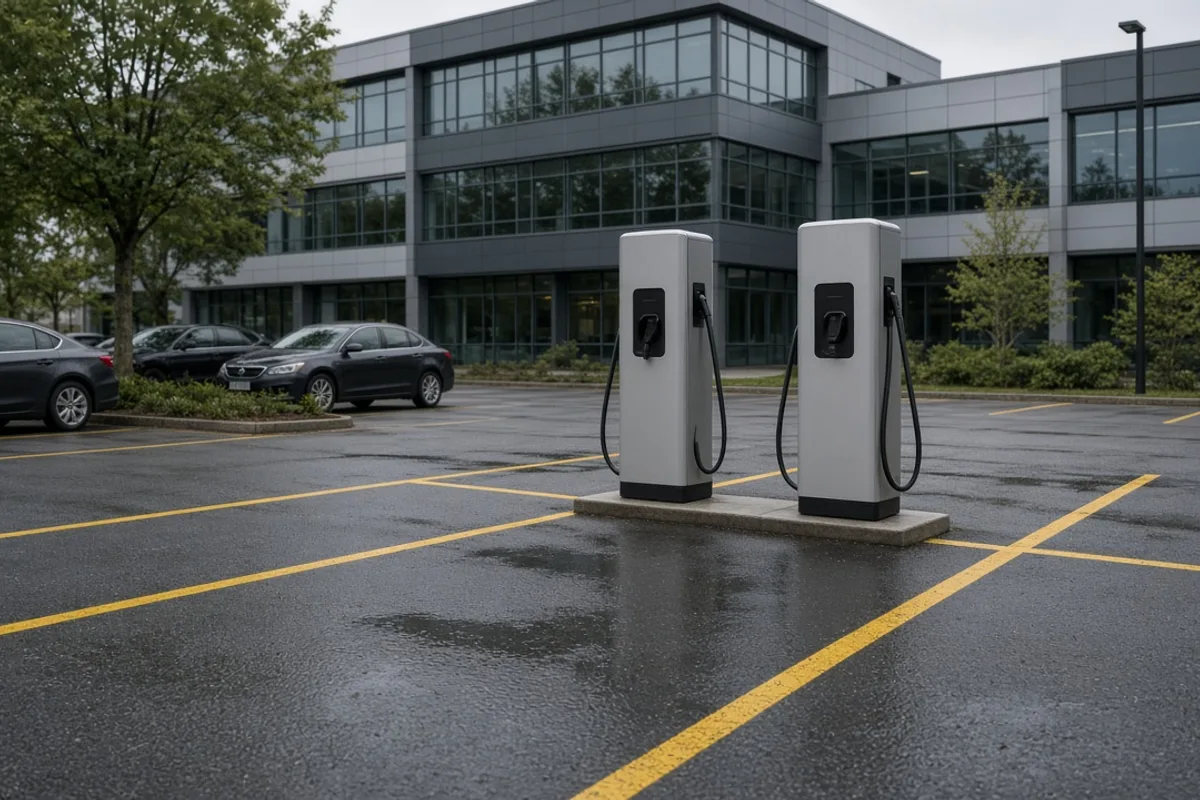
Space and approach
Provide transfer space beside the vehicle and a route to the charger that does not force users through live traffic. Avoid kerbs between bay and pedestal where possible, or provide flush crossings.
Consider side-entry and rear-entry wheelchair accessible vehicles when marking hatched zones.
Reach, strength and dexterity
Connector holsters, screen menus and contactless readers should sit within commonly referenced accessible reach ranges. Heavy tethered cables can exclude users; untethered designs with supported cable management may help.
Gloves, rain and poor lighting make fiddly latches worse. Specify large, high-contrast controls.
- Non-slip, well-drained standing area
- Lighting that avoids deep glare on screens
- Help point or phone number that actually answers
Information and payment
Apps-only access excludes many people. Offer contactless or other open payment methods consistent with public charging expectations, and provide clear tariff boards.
Signs should use large type and not rely on colour alone.
Residential and workplace specifics
Communal residential systems should reserve or prioritise accessible bays rather than letting them become the default overflow for any EV. Workplaces should include accessible charging in staff benefit designs, not as an afterthought behind the bin store.
Maintenance contracts must keep hatched zones clear of cones and pallets.
Compliance mindset
Cross-check layouts against current British Standards for accessible parking and against any local planning conditions. Building Regulations considerations for new parks under Part S sit alongside wider Equality Act duties for service providers.
Document design decisions so future phases do not silently drop inclusive features.
Frequently asked questions
Is one accessible bay enough?
It depends on park size and demand. Larger destinations need more than a token bay, placed where people actually want to charge.
Can accessible bays be time-limited?
Fair-use limits can help turnover, but rules must remain workable for drivers who need longer to connect and disconnect.
Do tethered chargers fail accessibility?
Not automatically, but cable weight and length often cause problems. Test with real users.
Who should review drawings?
An access consultant and, where possible, disabled EV drivers familiar with charging hardware.
Core buying guides
Start with these high-intent guides, then dig into the rest of the library.
Related guides
Sources and further reading
How this guide was prepared
This guide was written by the Local EV Installers Editorial Team. We compare official guidance, legislation and established consumer information, separate general information from project-specific advice, and show publication dates and sources. We do not accept installer accreditation claims at face value.