
Tethered EV chargers usually cost a little more at hardware level than untethered sockets because the cable is built in, but the installation labour is often almost identical for the same mounting point and cable run back to the consumer unit. Untethered units can look neater and suit households that already own a Type 2 lead, while tethered units are quicker to plug in daily. Choose for convenience and parking layout first, then compare written quotes for the same power rating and route.
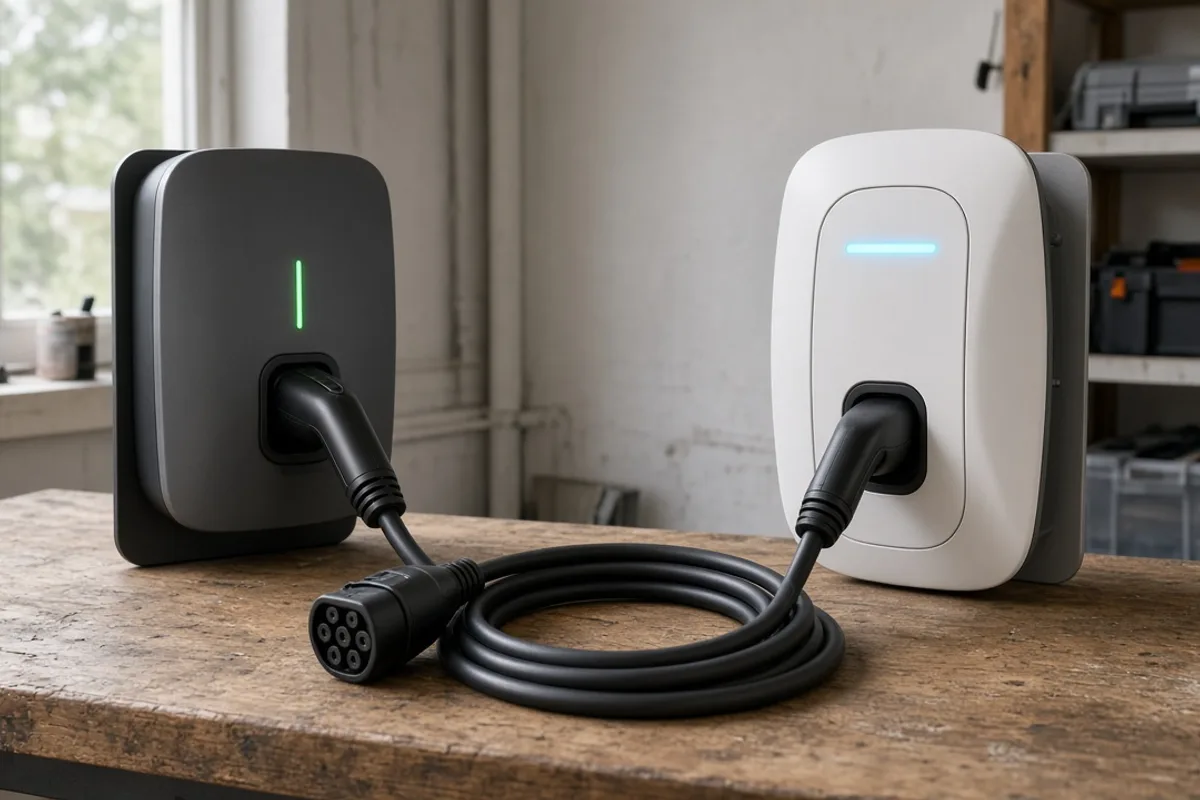
What tethered and untethered mean
A tethered charger has a fixed charging cable attached to the wallbox. You unfold it, plug into the car, and coil it back when finished. An untethered charger is a socket outlet on the wall. You bring your own Mode 3 Type 2 cable each time, then take it away.
Both are common on UK 7kW domestic installs. Neither choice changes the fundamental electrical job: a dedicated circuit, correct protection and a safe mounting position relative to the parking bay.
Where the money differs
Hardware list prices for tethered models are often modestly higher because of the integrated cable and strain relief. Install labour for the circuit is usually the same if the box sits in the same place. The bigger cost drivers remain cable distance to the board, civil works and any consumer unit upgrade.
If you do not already own a quality Type 2 lead, factor that purchase into an untethered comparison. A cheap thin cable is a false economy outdoors in winter.
- Tethered: slightly higher unit price, fastest daily routine, cable always on site
- Untethered: often lower unit price, flexible cable choice, wall looks cleaner
- Install circuit cost: usually similar for the same location and run
Cable length and parking geometry
Tethered lengths of around 5m to 8m are common. Measure from the proposed wallbox to both sides of the car and to any second vehicle. A beautifully installed tethered unit that cannot reach the inlet is an expensive annoyance.
Untethered setups let you keep a longer personal cable in the boot for awkward bays, which helps on narrow terraces or when the inlet sits on the far side of the car.
Weather, security and shared spaces
Tethered cables live outdoors and need tidy storage against theft and trip hazards. Untethered sockets reduce hanging cable theft risk when not in use, which some flat and workplace users prefer. In shared courtyards, a socket plus personal cable can also reduce arguments about who left a lead trailing.
Whatever you choose, the installer should still site the unit to avoid pavements, gates and wheelchair routes.
How to compare quotes fairly
Ask each installer to price the same mounting height, the same circuit route and the same smart features, then show tethered and untethered options as a hardware delta. That keeps the comparison honest. A quote form with photos of your bay helps both options be priced without guesswork.
Frequently asked questions
Is a tethered charger safer?
Both can be safe when installed correctly. Tethered units reduce the chance of using an unsuitable cable, while untethered units rely on you storing and using a compliant Mode 3 lead. Follow the manufacturer guidance and keep connectors clean and dry.
Can I switch later?
Swapping tethered for untethered usually means changing the wallbox, not redoing the entire circuit, provided the new unit matches the supply and mounting. Budget for labour and any smart reconfiguration.
Which is better for two cars?
One untethered socket with a long lead can sometimes serve awkward dual parking better, but two dedicated points or a load-managed pair may be cleaner. Discuss bay layout on survey.
Do grants favour one type?
Grant rules focus on eligible applicants, authorised installers and approved chargepoint lists rather than tethered versus untethered as a preference. Check the live eligible product list for your scheme.
Core buying guides
Start with these high-intent guides, then dig into the rest of the library.
Related guides
Sources and further reading
How this guide was prepared
This guide was written by the Local EV Installers Editorial Team. We compare official guidance, legislation and established consumer information, separate general information from project-specific advice, and show publication dates and sources. We do not accept installer accreditation claims at face value.