
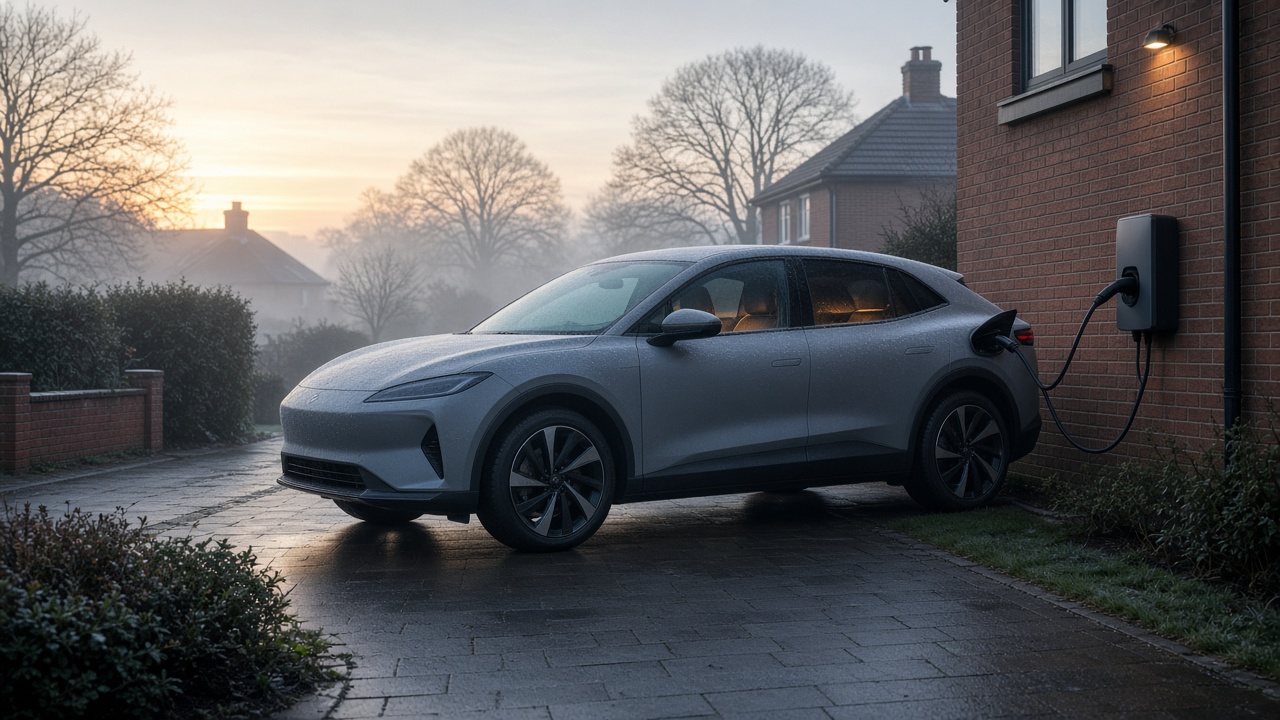
Cabin preconditioning means warming or cooling the passenger compartment before you drive, usually from a phone app or the car's schedule. On a UK driveway the smart version of that habit is to do it while the car is still plugged into the home wallbox, so the grid, not the traction battery, pays for the heater or climate compressor. That keeps more of the pack for miles, which matters most on cold mornings when batteries already deliver less range. If you also use a cheap overnight EV tariff, preconditioning should sit inside or against that window and against a ready-by time, not as a random blast after you have already unplugged. The expensive mistake is walking out to a cold car, starting climate from the battery on the drive, then discovering the predicted range has dropped before you have left the street.
What preconditioning actually uses
An EV cabin heater is not a free gift from the motor. Resistive heaters and heat-pump climate systems both draw electrical power. When the car is unplugged, that power comes from the same traction pack that moves the wheels. When the car is plugged in and accepting charge, many models can run cabin climate from the incoming supply while holding or even raising the state of charge. The exact behaviour sits in the car's software. The household idea is simple: heat and cool from the wall when you can.
Ofgem's guidance on home charging is blunt about the supply picture. At home, power to the chargepoint arrives through your ordinary domestic electricity supply. The car on the drive is treated like other household equipment drawing through that connection. Preconditioning while plugged in is therefore a home electricity use, billed at whatever unit rate applies at that minute, not a mysterious separate fuel.
Energy Saving Trust advice on electric vehicles and charging keeps returning to the same practical pattern for drivers with off-street parking: do the heavy energy work at home, on a controlled tariff where you can. Cabin preconditioning is a smaller cousin of overnight charging, but it still belongs in that home-energy story. Public Rapid chargers are for journeys. Frosty Tuesday mornings on the drive are for the wallbox.
Battery thermal preconditioning is related but not identical. Some cars warm the pack before a Rapid session or before a cold departure so chemistry works better. Cabin preconditioning is about people comfort. Both can draw power. Both are kinder to the pack when the cable is in. Read the car maker's labels in the app so you know which switch you are pressing.
Why winter mornings punish an unplugged start
Cold packs accept charge more slowly and deliver less usable range until they warm. Cabin heaters on those mornings can be greedy, especially in older EVs that lean on resistive heat. If you unplug at 07:00, walk back inside for toast, then fire the climate from the phone at 07:20, you are spending traction energy on air while the pack is still cold. Predicted range often falls by a noticeable chunk before the car has moved.
A plugged-in schedule that starts climate twenty or thirty minutes before departure flips the bill. The wallbox supplies the cabin load. Many cars will also take a top-up of charge in the same window if the pack is below the daily limit you set. You open the door to a clear windscreen and a pack that has not just paid for the defrost. That is the winter habit worth teaching every driver in the house.
Ice on the glass is not only a scraper problem. Running the climate while plugged in clears mist and softens ice without idling a combustion engine on the street. Neighbours notice quiet electric cars that still somehow warm up. The cable is why. Leave the car unplugged overnight on a freezing drive and you force a choice between a miserable cabin and a range hit.
Short UK journeys amplify the effect. A three-mile school run does not give the pack long to warm from driving. If half of a small daily budget went into cabin heat on the driveway, the percentage looks ugly on the dash even though the absolute kilowatt hours are modest. Preconditioning on plug protects those short-trip days more than long motorway runs where waste heat and distance dilute the story.
Cheap overnight windows and ready-by times
Time-of-use EV tariffs sell cheap night units and often a higher day rate. Overnight charging already wants the car plugged in through that window. Preconditioning wants a second look at the clock. If your cheap window ends at 05:30 and you leave at 07:15, a climate start at 06:50 may land on the expensive morning rate even though the cable is in. That can still be worth it for comfort and range. It is not free. Know which rate you are buying.
A better pattern on many tariffs is to finish bulk charging inside the cheap window, keep the car plugged in, and schedule cabin climate so it finishes near departure. Some smart tariffs and car apps coordinate a ready-by time: the pack hits your target state of charge by a chosen hour, and climate can be tied to the same departure. Intelligent-style products already think in ready-by language for charging. Extend that thinking to the cabin.
Do not let the charger schedule fight the climate schedule. If the wallbox stops all power at 05:30 and the car expects to pull climate at 07:00, some setups will fall back to the battery even while the cable looks connected. Test one weekday. Watch the session kWh on the charger and the cabin power behaviour in the car app. A five-minute check beats a month of guessing why mornings feel expensive.
GOV.UK chargepoint specification pages exist mainly for grant-eligible kit and technical standards, but they reinforce the same hardware story Energy Saving Trust and Electrical Safety First push for households: a proper residential chargepoint on a compliant install is what makes home energy features reliable. Preconditioning habits sit on top of that ironmongery. A flaky Mode 2 lead through a window is the wrong foundation for a timed winter routine.
The mistakes that waste plug power or pack power
The classic mistake is preconditioning after unplug. You tidy the cable, lock the charge port, then remember the frost and start climate from the kitchen. The dash heater icon comes on, the pack discharges, and you have turned a grid opportunity into a battery cost. Plug back in if you still have time. If you do not, accept the range hit and leave earlier, rather than cranking climate to maximum for ten minutes of drama.
The second mistake is climate at 22:00 for a 07:00 departure with no schedule. The cabin cools again overnight. You have spent evening units, sometimes peak ones, on air that will not be there in the morning. Use a departure schedule or a timed precondition, not a random remote blast after the news.
The third mistake is assuming every car will take cabin load from the grid whenever a cable is attached. Some vehicles need charging enabled, a wake message, or a specific precondition-while-plugged setting. After a software update those rules can change. When you collect a new EV, ask the dealer to demonstrate a plugged-in cabin warm-up on your wallbox before you invent a routine that only drains the pack.
Shared drives add social mistakes. Someone unplugs you at 06:00 to free the lead, or a second car steals the only socket. Household rules matter as much as apps. If two EVs share one charger, stagger ready-by times and decide who gets morning climate priority on school days. A calendar on the fridge beats an argument on the drive.
- Keep the cable in until you actually leave
- Tie cabin climate to a departure or ready-by time
- Check whether morning climate sits inside your cheap tariff window
- Test that grid power, not only the pack, is feeding the heater
Summer cooling, demist and everyday comfort
Preconditioning is not only a frost story. A car that sat on a sunny UK driveway can hit uncomfortable cabin temperatures by late afternoon. Cooling while plugged in at home before an evening trip protects both comfort and the pack, the same way winter heat does. If you are on a tariff with expensive late-afternoon rates, you may still prefer a short cool-down for safety and comfort. Know the trade.
Demist before a wet commute is another quiet win. Clearing glass with climate while plugged in means less frantic fan use in the first mile, when you would rather watch traffic than wipe the windscreen. Parents doing rain-soaked school runs feel this more than brochure range charts show.
Seat heaters and steering heaters often use less energy than full cabin blast. Many drivers get comfortable enough with those plus a moderate cabin target, especially once the car is moving. That nuance still works best when the initial push happened on plug. Starting from a frozen cabin forces the big climate load either way.
Workplace chargers and destination AC posts can support the same idea if you will be parked long enough. The physics does not care whether the plug is at home. The bill and the tariff do. Home is where most UK drivers with drives can control both.
How to set a routine that survives a real week
Pick your usual departure times for weekdays and the one weekend pattern that actually happens. Enter those as ready-by or departure times in the car. Enable preconditioning to finish near those times. Leave the wallbox authorised overnight so a schedule can wake the car. If your charger has a randomised delay for grid reasons, give the cheap window enough length that charge and climate still fit.
Once a season, on a cold morning, note the predicted range before climate, after a plugged-in precondition, and after an unplugged precondition on a different day. You do not need a lab. You need proof for yourself that the cable changes the morning number. That proof is what stops the household sliding back into unplug-first habits.
When you change tariff, change car, or change school-run timing, revisit the schedules the same week. Old climate timers on a new peak-rate morning are how people buy expensive comfort without noticing. Energy Saving Trust's wider EV charging message still holds: home charging works when behaviour and hardware line up. Preconditioning is behaviour.
The dull rule is the useful one. Arrive home, plug in, leave the cable until you drive away, and let the car make the cabin ready on grid power. Everything else is settings detail on top of that habit.
Frequently asked questions
Does preconditioning while plugged in use my cheap EV rate?
Only if it runs during the cheap window on your tariff. Plugged in after the window ends still uses grid power, but at the rate then in force. Check your hours.
Will preconditioning charge my battery at the same time?
Often the car can climate and charge together while plugged in, up to your daily charge limit. Behaviour varies by model. Watch one morning session in the app to confirm.
Is it bad for the battery to heat the cabin from the pack?
Occasional use is normal. Doing it every winter morning as your main plan wastes range and makes short trips look worse. Prefer plug-in climate when you have a wallbox.
What if I have no driveway charger?
Then cabin heat before driving will usually come from the pack, or from a public post if you are plugged in there. The range trade-off is the same physics without the home-tariff control.
Should I precondition every summer evening too?
When the cabin is hot enough to be unpleasant or unsafe for passengers, yes, especially if you can do it while plugged in. A mild evening may need nothing more than venting as you start.
Core buying guides
Start with these high-intent guides, then dig into the rest of the library.
Related guides
Sources and further reading
- Energy Saving Trust: Electric vehicles and charging
- Ofgem: Taking charge, selling electricity to Electric Vehicle drivers
- GOV.UK: Electric vehicle chargepoint and infrastructure specifications
- GOV.UK: Residential chargepoints minimum technical specification
- Electrical Safety First: electric vehicle charge points
How this guide was prepared
This guide was written by the Local EV Installers Editorial Team. We compare official guidance, legislation and established consumer information, separate general information from project-specific advice, and show publication dates and sources. We do not accept installer accreditation claims at face value.