
Vehicle-to-home, or V2H, uses a compatible EV battery to power household loads through specialised bidirectional equipment. It is not the same as ordinary one-way charging, and it is not automatically the same as vehicle-to-grid export schemes. UK availability depends on vehicle support, charger or converter hardware, electrical design, warranty terms and supplier or network rules. Treat marketing claims cautiously. Ask for a surveyed design that explains islanding behaviour, protection, metering and what happens in a power cut. Cost planning should separate bidirectional hardware from a standard 7 kW wallbox budget band.
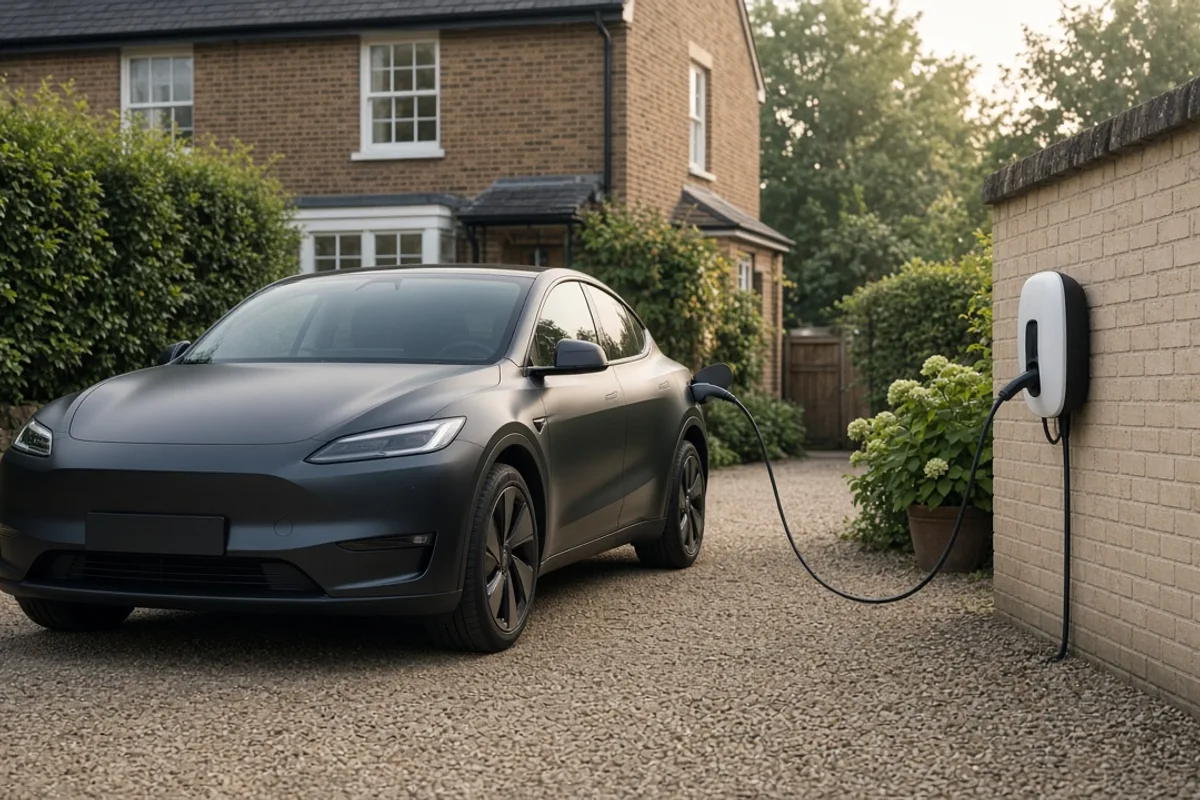
V2H versus V2G versus normal charging
Normal chargers only put energy into the car. V2H can discharge into the home. V2G typically aims at export or grid services beyond the property boundary and may involve different market and metering arrangements.
A product labelled bidirectional still needs matching vehicle firmware, connector standards and installer competence. Assume nothing from the badge alone.
Hardware and property requirements
Bidirectional systems may need dedicated inverters, transfer equipment, revised consumer unit arrangements and careful earthing. Not every driveway wallbox slot is suitable.
If you want backup during outages, that is an additional design problem involving safe isolation from the grid. It is not a software toggle on a standard smart charger.
- Confirm vehicle manufacturer approval for bidirectional use.
- Check warranty impact on battery cycle life claims.
- Ask how much usable energy will remain reserved for driving.
Economics without hype
Value depends on tariff spreads, round-trip losses, battery degradation policy and capital cost. Illustrative unit rates can sketch potential arbitrage, but standing charges and hardware amortisation still matter.
For many households, a well-scheduled one-way charger on a strong overnight tariff remains the simpler money saver in 2026.
Standards, safety and notifications
Protection against islanding inappropriately, correct isolation and compliance with wiring practices are non-negotiable. Network notification or applications may differ from a standard connect-and-notify EV charger.
Use installers who can show relevant product training and electrical competence, not only EV sales experience.
Who should wait
If your car does not support bidirectional modes, if you change cars often, or if you need a straightforward grant-friendly one-way point now, waiting can be rational while standards and product choices mature.
You can still future-proof containment space and consumer unit capacity without buying immature hardware today.
Frequently asked questions
Can any EV do V2H?
No. The vehicle, inlet and manufacturer permissions must support it. Many EVs remain one-way only.
Is V2H the same as using the car as a home battery?
Conceptually similar in that energy can flow to household loads, but equipment, safety rules and warranties differ from a stationary home battery.
Will V2H power my whole house in a blackout?
Only if the system is specifically designed and approved for backup operation with correct isolation. Many setups are not automatic whole-house backup.
Should I delay a normal charger for V2H?
Only if you already own a compatible vehicle and have a clear surveyed use case. Otherwise a standard smart charger may be the better near-term install.
Core buying guides
Start with these high-intent guides, then dig into the rest of the library.
Related guides
Sources and further reading
How this guide was prepared
This guide was written by the Local EV Installers Editorial Team. We compare official guidance, legislation and established consumer information, separate general information from project-specific advice, and show publication dates and sources. We do not accept installer accreditation claims at face value.