
Two cars do not automatically need two 7 kW circuits. Many homes cannot spare 64 amps on top of the oven and the shower. Practical patterns are: one wallbox and a routine that swaps the lead over, a dual-socket unit with load sharing, or two chargers managed so the house never exceeds a set limit. The right pattern depends on mileage, overlap of plug-in times and the cut-out. A plug-in hybrid as the second car often makes a single 7 kW point enough.
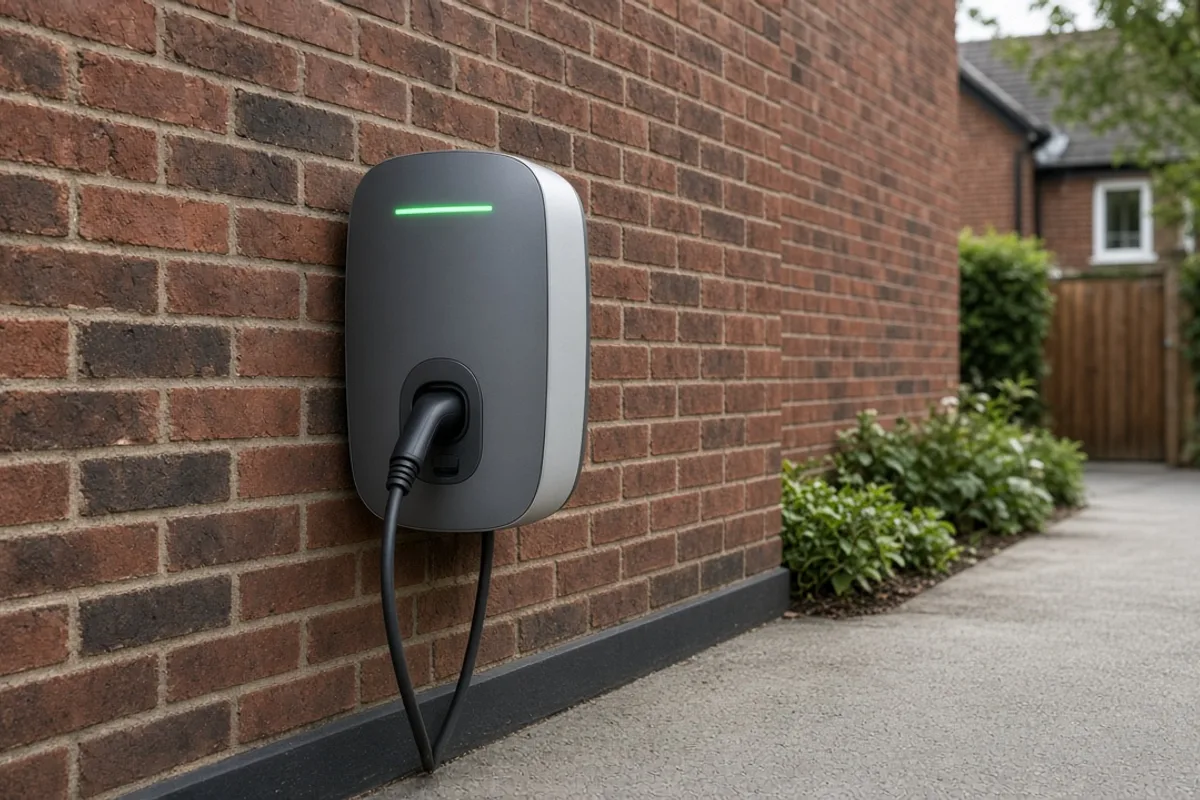
The price effect of two electric cars and one home charger
Two unmanaged 7 kW chargers are how main fuses get upgraded, or how they fail. Price management or a fuse upgrade on purpose.
A miss that shows up later: two electric cars and one home charger
The mistake is a second cheap wallbox on the ring main, or a splitter lead that back-feeds a socket.
Write two electric cars and one home charger into the quote
The quote should state the maximum current the house will draw and how the chargers back off.
Two electric cars and one home charger
Add the two overnight needs. If both must be full by 7am after long days, say so. If one does 20 miles, the design is easier.
- One point and a swap suits many homes
- Two full-rate chargers need capacity or management
- A PHEV second car is an easier load
- Say if both must be full by morning
Check two electric cars and one home charger before you accept a price
A second tether or a second post is a convenience. Load management is the electrical safety case. Do not skip it because the app looks clever.
Frequently asked questions
Will a dual socket give both cars 7 kW?
Only if the supply is there. Many dual units share a limit.
Can we schedule one after the other?
Yes. That is often the cheapest control method if someone rarely needs both full.
Do we need two grants?
Assume no. Schemes cap support. Read the current rule.
What lead length suits two bays?
Measure both parked positions. One short tether will not reach the far car.
Core buying guides
Start with these high-intent guides, then dig into the rest of the library.
Related guides
Sources and further reading
How this guide was prepared
This guide was written by the Local EV Installers Editorial Team. We compare official guidance, legislation and established consumer information, separate general information from project-specific advice, and show publication dates and sources. We do not accept installer accreditation claims at face value.