
Some UK terraces park on a rear lane or a yard behind the house. That can be a genuine place for a wallbox if the land is yours, or a private lane with rights, and the cable can get from the consumer unit to that wall. If the lane is adopted highway, you are back to council consent and you cannot treat it as a driveway. The first job is the map and the deed, not the drill.
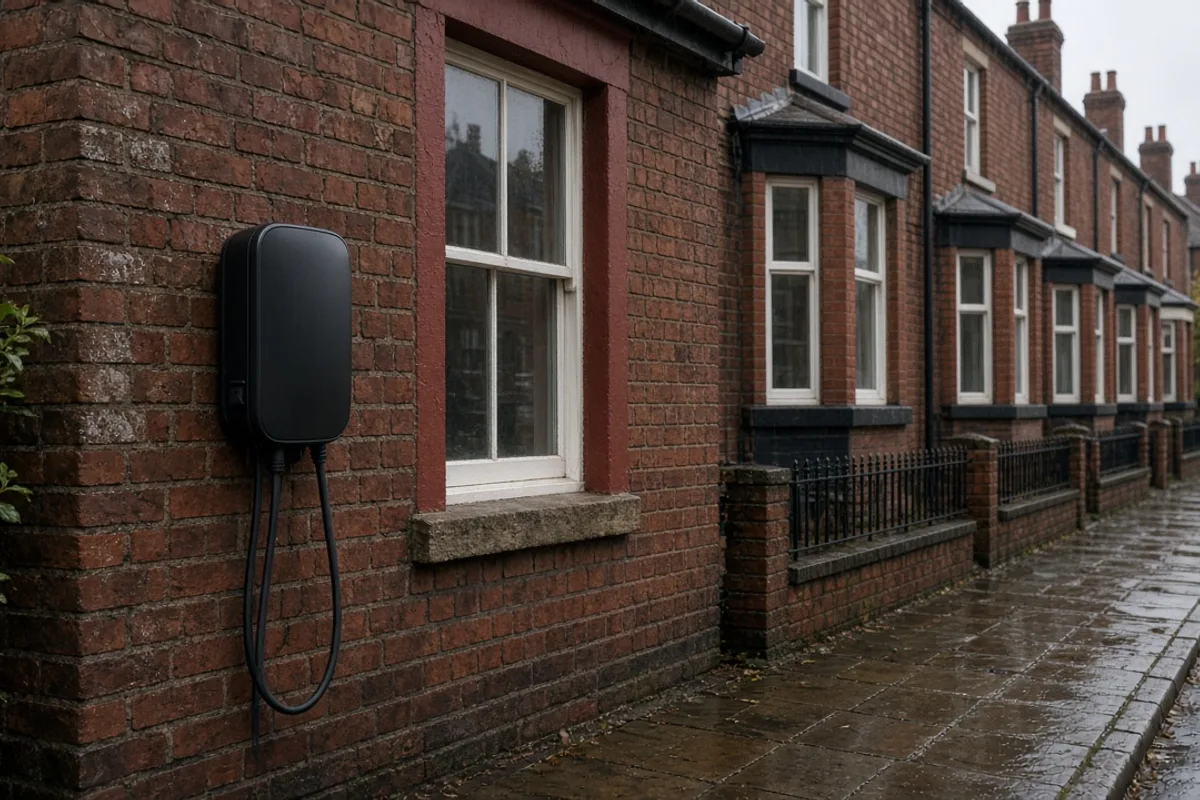
Point at eV chargers on rear-lane terraces in the pack
Confirm ownership, then ask for a route from the board to the rear wall with the lead path drawn.
EV chargers on rear-lane terraces
Measure the internal route to the back. Mid-terrace houses can need a long cable for a short-looking lane.
- Private yard and public lane are different
- Mid-terrace cable runs are the hidden cost
- Do not block a right of way
- A real bay beats a front-pavement lead
EV chargers on rear-lane terraces: questions for the first visit
Shared ginnels and rights of way must stay passable. A post in the middle of a neighbour's right of way will come down.
How eV chargers on rear-lane terraces moves the job
The install itself may be a normal 7 kW price plus a long cable. The legal question can be the expensive one if you guess wrong.
What goes wrong with eV chargers on rear-lane terraces
The mistake is copying a front-of-house cross-pavement design onto a lane that was a perfectly good private wall.
Frequently asked questions
Who tells me if the lane is adopted?
The highway authority. A search or a council question is better than a neighbour's memory.
Can two houses share a post on the boundary?
Only with a written agreement about power, maintenance and sale. Electrically it still needs a proper design.
What about gates?
Swing them on the drawing. Chargers behind gates that hit them do not survive.
Is the consumer unit allowed to feed the rear?
Yes if the circuit is designed for the length. Voltage drop is the check.
Core buying guides
Start with these high-intent guides, then dig into the rest of the library.
Related guides
Sources and further reading
How this guide was prepared
This guide was written by the Local EV Installers Editorial Team. We compare official guidance, legislation and established consumer information, separate general information from project-specific advice, and show publication dates and sources. We do not accept installer accreditation claims at face value.