
An isolator lets someone switch the charger circuit off without hunting for the consumer unit. For an outdoor charger it should be local enough to use in an emergency, labelled, and suitable for being outdoors if it is outdoors. Putting it in a locked garage on the other side of the house, or at ceiling height behind a bin, misses the point.
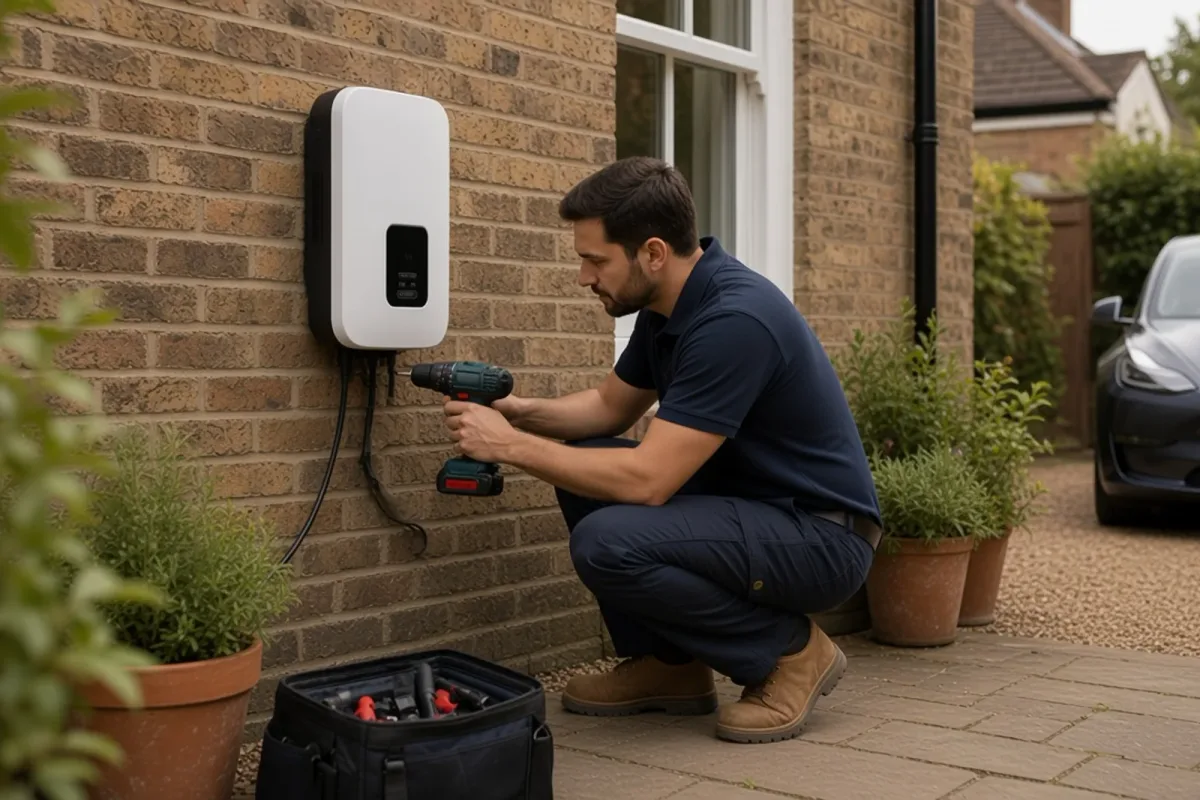
Where to put an EV charger isolator and the written scope
A proper outdoor isolator is a small line in the quote and a large argument if it is forgotten and the certificate is questioned. Do not accept an indoor switch as the only means of isolation for a remote post unless the design truly allows it and it is labelled at the charger.
The expensive shortcut on where to put an EV charger isolator
The mistake is using an indoor light switch, or a socket, as a pretend isolator. Another is fitting a metal isolator where the earthing design did not account for it.
Handover when where to put an EV charger isolator is the issue
Ask the quote to show isolator type and location, and check on the day that it actually kills the charger.
Where to put an EV charger isolator
Some wallboxes have a built-in isolation method and some designs still want a separate rotary isolator beside the unit. The manufacturer instructions and the wiring design decide. A pretty install that hides the switch behind the charger lid is fine only if a person can find it.
- The switch must be findable in a hurry
- Outdoor locations need outdoor kit
- Follow the charger manual
- Label the circuit at the board too
What a survey must prove about where to put an EV charger isolator
Walk the route from the drive to the consumer unit and agree the isolator spot before the containment is fixed. Think about rain, a car door and children.
Frequently asked questions
Is the app an isolator?
No. An app is not a safe means of isolation for electrical work or an emergency. You need a real switch.
Can it be inside the porch?
Yes if it is clearly related to the outdoor charger and the design agrees. Label it.
Do workplaces do this differently?
They often want a labelled isolator per bay or per row, plus a way for facilities staff to kill a point. The principle is the same.
Who tests it?
The installer, as part of commissioning. You should see it demonstrated.
Core buying guides
Start with these high-intent guides, then dig into the rest of the library.
Related guides
Sources and further reading
How this guide was prepared
This guide was written by the Local EV Installers Editorial Team. We compare official guidance, legislation and established consumer information, separate general information from project-specific advice, and show publication dates and sources. We do not accept installer accreditation claims at face value.