
A dropped kerb, also called a vehicle crossover, lets you drive from the road onto your own frontage. It is a highways consent from the local council, often with a separate planning question about the hard surface, and it is not the same job as a cross-pavement charging channel. Order the charger only after you know the crossover will be approved and where the car will actually sit. A wallbox on a house that still parks in the street does not become useful just because a kerb application is in progress.
Three permissions that people fold into one quote
The pavement in front of a typical English or Welsh house is highway. Lowering the kerb and strengthening the footway so a car can cross it is the council's asset, not a weekend job with a disc cutter. Ask the highways team whether they build the crossover themselves or whether you must use a contractor from their list. Scotland and Northern Ireland run the same idea through their own roads authorities.
The garden surface is a second question. Planning Portal guidance for householders in England says a new or replacement front drive of any size can stay within permitted development if it uses a permeable surface, such as gravel or permeable blocks, or if rainwater drains to a lawn or border on the property. If you cover more than five square metres with a traditional impermeable surface that does not drain that way, planning permission is the usual next step. Listed buildings, flats and Article 4 directions can take even a small hardstanding out of those householder rules.
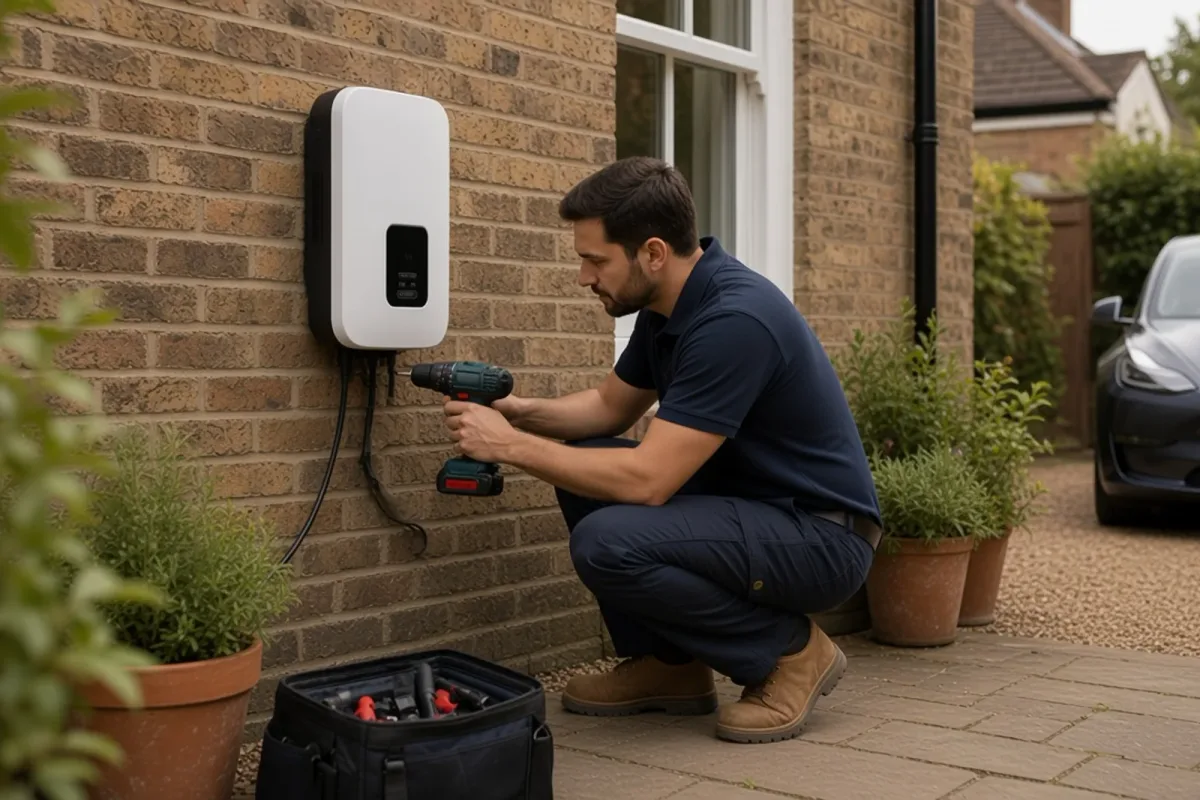
The wallbox is the third job. It needs a dedicated circuit, earthing checks and a network notification for a demand connection. None of that creates a right to drive across the pavement.
A channel and a crossover solve different nights
A cross-pavement gully or channel is for a car that stays on the public road, with a lead that never lies loose on the footway. A dropped kerb is for a car that leaves the road and parks on your land. If the frontage is too short for the vehicle, or the sight line at the junction is poor, the council can refuse the crossover and you are back to on-street charging.
Do not pay for a tethered wallbox while the highways answer is still open. Hardware in a garage is a poor consolation if the only lawful park remains the residents' bay.
- Council page for vehicle crossovers, saved on the day you apply
- A sketch showing the car fully on your land, not overhanging the footway
- Whether the crossover fee includes the pavement works or only the licence
- A charger quote that starts after the bay position is agreed
What the money is actually for
Treat the council charge, the garden build and the electrics as separate lines. Councils publish their own crossover fees and they are not national. A straightforward 7kW driveway install often budgets around £800 to £1,400 including VAT in September 2026 only once the car can park beside a short cable run. That band does not include a new crossing or a new drive.
VAT on the electrical retrofit at an existing house is normally 20%. The paving contractor's VAT treatment is their invoice, not a reason to zero-rate the wallbox.
Where the charger should face once the car is off the road
Mark the bay before anyone mounts the box. The lead has to reach the charge port in the direction you will park every night, including when a second car uses the same drive. A post in the middle of a short frontage can block the only place the car fits.
If the meter is at the back and the new bay is at the front, the cable route across the house can cost more than the crossover fee. Put that route in the electrical survey while the drive layout can still move a little.
Frequently asked questions
Can I drop the kerb myself if I own the house?
No. The footway is highway. The council has to authorise the crossover, and it often insists on its own contractor or an approved one.
Does planning permission for a drive include the charger?
No. Planning for the hard surface, highways consent for the crossing, and the electrical installation are separate. A wallbox on a dwelling is often straightforward, but listed buildings and flats need their own check.
Should I apply for a charging gully and a dropped kerb together?
Only if you are genuinely unsure which park you will end up with. They are alternative ways to reach the car. Most streets want one clear proposal.
Will a grant pay for the kerb?
Do not assume it. OZEV on-street and household schemes have their own eligible costs. Check the live GOV.UK page before you subtract a crossing fee from a quote.
Core buying guides
Start with these high-intent guides, then dig into the rest of the library.
Related guides
Sources and further reading
How this guide was prepared
This guide was written by the Local EV Installers Editorial Team. We compare official guidance, legislation and established consumer information, separate general information from project-specific advice, and show publication dates and sources. We do not accept installer accreditation claims at face value.